

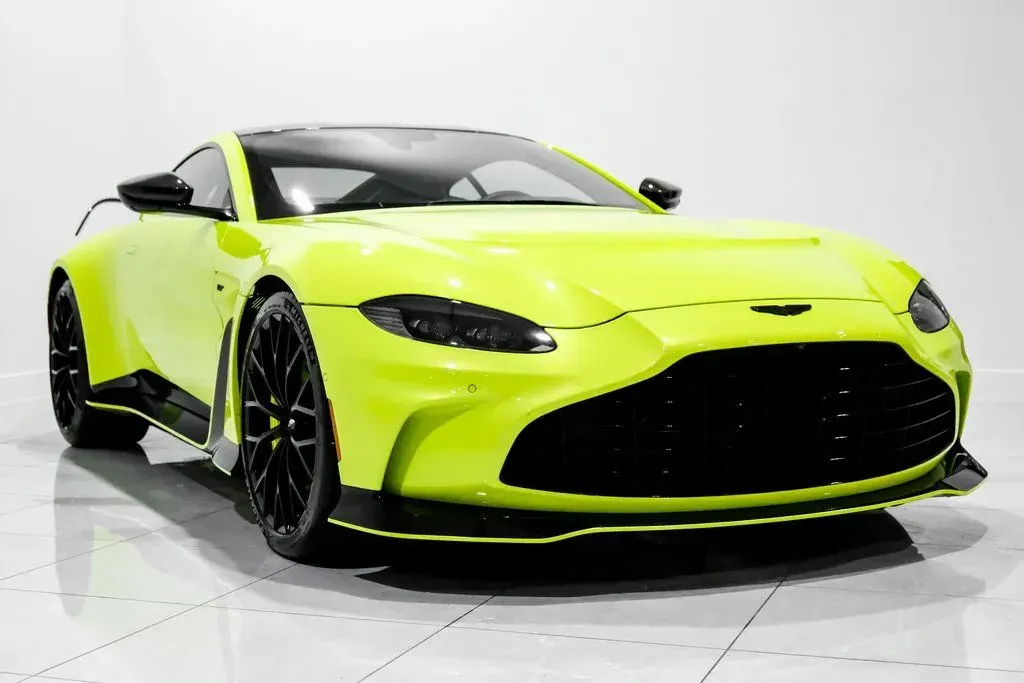
Aston Martin has produced some of the most collectible automobiles of the past century, and the auction market has consistently reflected that. From the DB5, whose cultural importance transcends the car itself, to the One-77 hypercar that has achieved seven-figure sale prices, Aston Martin represents one of the few marques where both heritage models and modern limited-production vehicles can attract significant interest at prestige car auctions worldwide.
Understanding what drives Aston Martin auction values, and which specific models have achieved the most significant results, is essential knowledge for any collector considering entry into this market. This guide draws on auction records, market data, and the patterns visible across rare car auctions to identify where value has historically concentrated and which factors may support future collector demand.
What makes an Aston Martin valuable at auction
Unlike some collector marques where a single factor dominates, racing provenance for certain Ferraris, for instance, Aston Martin value at auction is typically driven by the convergence of multiple factors. Understanding each individually makes it possible to assess any specific car’s collector appeal and potential market premium.
Provenance and documented history
Aston Martin’s heritage division, Aston Martin Works, maintains factory records and provides provenance support for historic models. A car with a complete, verifiable history, particularly one that includes Aston Martin Works documentation, original build records, or celebrity/notable ownership, may command a premium over an otherwise similar car with incomplete paperwork. At auction, the size of that premium depends on the significance of the provenance, the model, condition, mileage, and broader market demand.
Rarity and limited-production status
Aston Martin has consistently used limited-production variants to create collector interest. The One-77, with 77 examples produced, the Vanquish Zagato, with 99 coupes plus additional body styles, and the Vulcan, with 24 examples produced, all derive a significant portion of their collector appeal from deliberate production scarcity. Limited production can support stronger secondary-market interest, especially when paired with desirable specification, low mileage, and strong documentation.
Specification and originality
Aston Martin buyers have historically shown a strong preference for original factory specification, particularly original color combinations, original interior trim, and unmodified mechanical specification. Aftermarket modifications, non-standard colors, and altered interiors can reduce collector appeal, depending on the model and buyer audience. The strongest collector premiums are typically reserved for cars that present close to how they left the Gaydon or Newport Pagnell factory.
The DB5: Aston Martin’s most iconic collector car
No Aston Martin commands the cultural recognition of the DB5. Produced from 1963 to 1965 in approximately 1,000 examples, including convertible variants, the DB5 became globally synonymous with James Bond following its appearance in Goldfinger in 1964. That cultural association has never diminished, and it has helped support auction results that often exceed many comparable performance cars from the same era.
Standard DB5 examples with good provenance can achieve roughly $600,000 to $900,000+ at major auction houses, with exceptional cars, rare body styles, or highly documented examples trading higher. Cars with direct Bond film connection, such as original Goldfinger production cars, have achieved multi-million-dollar results. Even the DB5 Goldfinger Continuation cars produced by Aston Martin Works beginning in 2020, faithful recreations built with original tooling and equipped with Bond-inspired gadgetry, were priced at approximately $3.4 million before taxes at the time of release.
For the purposes of first-time collector guidance, genuine DB5s are significant capital investments that require specialist acquisition advice. However, their position as the definitive Aston Martin collector car can give them a level of demand resilience that fewer marques can match.
The One-77: the most expensive modern Aston Martin
When Aston Martin revealed the One-77 at the 2008 Paris Motor Show, it represented the company’s most ambitious technical statement to that point, with a hand-formed aluminum body over a carbon fiber tub, a 7.3-liter naturally aspirated V12 producing 750 hp, and a production run limited to 77 examples. Each car was individually commissioned, with buyers working directly with Aston Martin’s design team on specification.
At initial retail, One-77s were priced at approximately $1.8 million at the time of launch. The secondary market has since moved higher for many examples, with One-77s often discussed in the roughly $2 million to $3 million+ range, depending on mileage, specification, condition, provenance, and market timing. As one of Aston Martin’s most significant pre-electrification flagship models and one of the brand’s defining naturally aspirated V12 hypercars, the One-77’s collector credentials are strong.
Zagato collaborations: coachbuilt rarity at auction
Aston Martin’s relationship with Milan coachbuilder Zagato spans six decades and has produced some of the most visually distinctive and consistently valuable Aston Martins ever made. The collaboration follows a regular pattern: Aston Martin provides a platform, Zagato provides bespoke coachwork, production is strictly limited, and the secondary market responds with consistent premiums.
Key Zagato models and their auction performance:
| Model | Production run | Original retail | Secondary market range |
| DB4 GT Zagato (1960–63) | 19 examples | Approx. $17,000 | Approx. $8 million to $15 million+ |
| V8 Zagato (1986–90) | 52 coupes, 37 convertibles | Approx. $130,000 | Approx. $250,000 to $450,000 |
| DB7 Zagato (2002–03) | 99 examples | Approx. $270,000 | Approx. $150,000 to $325,000+ |
| Vanquish Zagato (2016–19) | 99 coupes + roadsters, shooting brakes, speedsters | Approx. $800,000+ | Approx. $400,000 to $900,000+ |
Values are indicative ranges based on auction records and specialist dealer transactions. Individual results depend heavily on provenance, condition, mileage, specification, originality, and market conditions at the time of sale.
The V12 Vanquish and Vanquish S: appreciating moderns
The V12 Vanquish, produced from 2001 to 2007, holds a particular position in Aston Martin collector culture as an early modern flagship that helped reestablish the brand’s grand touring identity. Its hand-built body, naturally aspirated 6.0-liter V12, and uncompromising grand touring brief make it one of the most overtly “Aston Martin” cars the company has produced in the modern era.
Vanquish values, particularly for the Vanquish S, have strengthened from their post-depreciation lows. Well-specified examples with full service history can now trade in the approximately $70,000 to $110,000 range, with especially desirable Vanquish S examples, low-mileage cars, or rare specifications achieving higher results. As the model continues to age into modern-classic territory, well-documented examples may continue to attract stronger collector attention.
Aston Martin Vulcan: track-only hyper-rarity
The Vulcan is one of the most extreme expressions of Aston Martin’s limited-production strategy: 24 examples produced, track use only, no standard road registration, and a naturally aspirated 7.0-liter V12 producing more than 800 hp. Initially priced at approximately $2.3 million, the Vulcan occupies a rare position within the Aston Martin portfolio. Select examples have appeared with asking prices well above original retail, especially when paired with extreme rarity, low use, or notable specification.
The Vulcan serves as a high-end example of how Aston Martin limited-edition vehicles can perform in the collector market. In this category, value is influenced less by everyday usability and more by rarity, brand positioning, specification, and provenance. Similar collector logic can apply at smaller scale to models such as the Vantage V600, DB7 Zagato, and V12 Vantage S manual, each of which benefits from limited production and strong enthusiast interest.
What the auction data tells us about Aston Martin values
Three consistent themes emerge from Aston Martin’s auction record. First, naturally aspirated, large-displacement, driver-focused models often command strong attention in the mid-tier collector market, with the V12 Vantage S and Vanquish S among the clearest modern examples. Second, limited production paired with strong documentation, including Aston Martin Works history where available, can support stronger auction outcomes. Third, the Bond cultural association continues to lift DB-series collector interest in a way few automotive storylines can match. A DB5 is not simply a classic car, it is a cultural artifact, and it is priced accordingly.
For collectors considering Aston Martin as a long-term investment, the question of whether collector cars represent a sound investment is worth reviewing alongside the specific Aston Martin data. The combination of brand prestige, finite supply, and consistent enthusiast demand gives Aston Martin a strong position within the prestige car auction market, though individual results still depend on condition, mileage, specification, documentation, and market timing.
Buying at auction vs private sale: what collectors should know
The highest-profile Aston Martin transactions often occur at auction because major auction platforms attract serious buyers and create transparent, competitive bidding environments. For collectors, an auction purchase can provide pricing visibility that is harder to replicate in a private sale, especially when comparable examples are limited.
Sotheby’s Motorsport provides access to Aston Martin auction inventory with collector-focused presentation, available documentation, and the credibility associated with the Sotheby’s name in the premium collectibles market. For a complete guide to how the acquisition process works on the platform, the article on how Sotheby’s Motorsport Aston Martin auctions work covers documentation, bidding, and post-purchase logistics in full detail.