

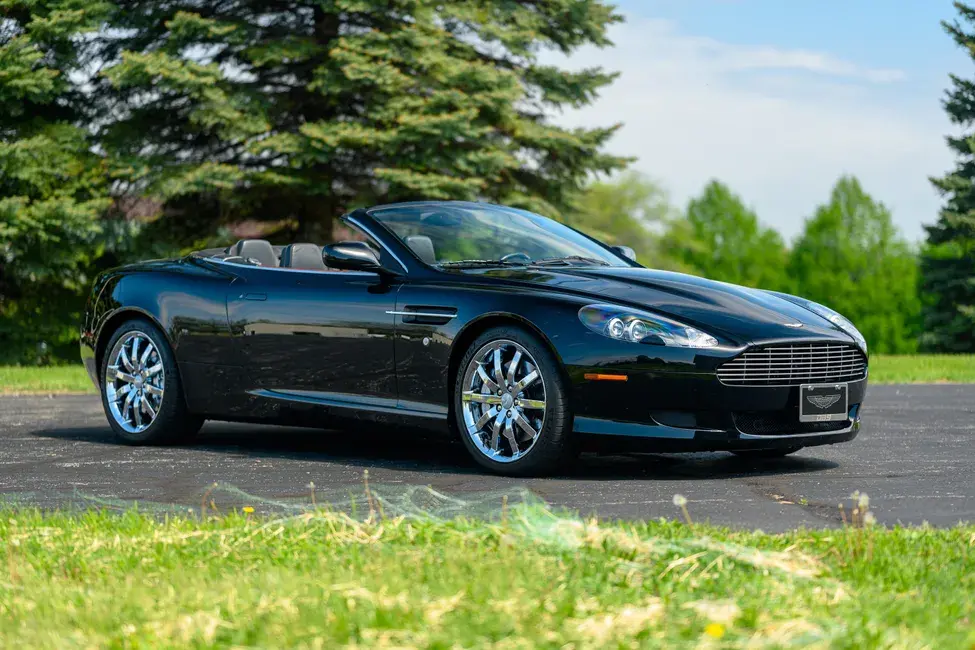
Aston Martin occupies a place in the collector car world that very few marques can claim. It is not simply a car manufacturer, it is a cultural institution, with a design language so consistent and a heritage so deep that even a buyer who has never sat behind the wheel can recognize the value of ownership. For first-time collectors approaching the Aston Martin market, that heritage is both an attraction and a complication: the range is broad, the model variations are numerous, and the buying decisions carry meaningful financial considerations.
This guide focuses on the models that offer the best combination of accessibility, driving experience, long-term collector appeal, and value retention for buyers entering the Aston Martin market in 2026. It draws on auction results, collector market trends, and the experience of buyers who have acquired Aston Martins through prestige car auctions and specialist platforms, including Sotheby’s Motorsport.
Why Aston Martin appeals to first-time collectors
Most collector car marques offer one dominant reason to buy. Porsche offers engineering precision. Ferrari offers motorsport theater. Aston Martin offers something more layered: a combination of British craftsmanship, grand touring capability, James Bond cultural resonance, and a design philosophy that has remained remarkably consistent since the DB4 of 1958.
For first-time collectors, that consistency is meaningful. Unlike some performance marques where generational design changes are dramatic, Aston Martin’s evolving but coherent aesthetic means that a DB9 purchased today still reads as unmistakably Aston Martin alongside a DBS Superleggera produced fifteen years later. That kind of design continuity can help support long-term collector appeal, especially when paired with strong condition, documentation, and desirable specifications.
Aston Martin also benefits from a well-established dealer and specialist network through Aston Martin Works, the brand’s own heritage division, which provides restoration services, parts availability, and provenance certification that can help reduce the risk associated with older model acquisition.
The DB9: the ideal entry-point Aston Martin
Produced from 2004 to 2016, the DB9 is the natural starting point for many first-time Aston Martin collectors. It was the car that redefined Aston Martin for the modern era, introducing the VH, or Vertical Horizontal, aluminium platform that underpinned Aston Martin models through the DB11 era and establishing the design language that would carry the brand for two decades.
The DB9’s 6.0-liter V12 engine, available in both coupe and Volante convertible configurations, delivers a driving experience that remains genuinely compelling. Crucially for collectors, well-documented, late-specification examples and DB9 GT models may be better positioned for long-term collector interest, especially when supported by strong service history, desirable specifications, and lower mileage.
What to look for in a DB9
A DB9 purchase requires specific due diligence. The aluminium-intensive VH platform makes corrosion less of a concern than traditional steel-bodied cars, but the bonding and riveting structure requires specialist inspection, ideally by an independent Aston Martin specialist rather than a general classic car inspector. Key areas to check:
- Major maintenance records, including annual servicing, fluid changes, plugs, coils, suspension components, brakes, and any documented engine or oil leak repairs
- Touchtronic gearbox condition on automatic models, including documented inspection and fluid service where applicable
- Electrical system integrity, especially on earlier DB9 models where body control modules, door latch mechanisms, and other electronic components can require attention
- Aston Martin Works provenance check, where available, so the VIN, original specification, and factory records can be reviewed
The V8 Vantage: a driver’s Aston Martin
If the DB9 is the grand tourer, the V8 Vantage is the sports car. Smaller, lighter, and more overtly focused on driving engagement, the V8 Vantage from 2005 to 2018 has developed a loyal following among collectors who prioritize the driving experience over prestige alone. The 4.7-liter V8 in its later specification produced up to 430 hp and delivered a particularly rewarding mechanical soundtrack.
The V8 Vantage is also currently among the most accessible points of entry into Aston Martin ownership from a price perspective, with well-maintained examples available through luxury car auctions in the approximately $40,000 to $65,000 range, depending on model year, mileage, transmission, condition, and specification. That accessibility, combined with genuine driver appeal and Aston Martin’s continued brand prestige, gives the V8 Vantage strong arguments as a compelling collector proposition in 2026.
Manual vs Sportshift: which to choose
The V8 Vantage was offered with a six-speed manual gearbox and Aston Martin’s Sportshift automated manual system. For collector purposes, the six-speed manual is often the preferred choice because it offers a more traditional driving experience, appeals strongly to enthusiast buyers, and may command a premium at resale. When budget and availability allow, a well-documented manual example is generally the stronger choice for long-term collector appeal.
The DBS and DBS Superleggera: grand touring at its finest
The DBS, first as a high-performance DB9-based model from 2007 to 2012 and later as the DBS Superleggera beginning in 2018, represents Aston Martin grand touring at its most powerful and expressive. The Superleggera name, borrowed from the Italian coachbuilder Touring and meaning “super-light,” signals the engineering ambition: a 715 hp twin-turbocharged V12, a 0 to 60 mph time of approximately 3.4 seconds, and a carbon fiber-intensive body designed to balance performance with long-distance grand touring capability.
For collectors with broader budgets, the DBS Superleggera represents an interesting proposition. As a relatively recent model, examples with low mileage and full history are still available, and the car’s position within Aston Martin’s transition from naturally aspirated V12 grand tourers to modern twin-turbocharged performance models gives it potential historical relevance for future collector markets.
The V12 Vantage: a collector’s Aston Martin
Of all the models discussed in this guide, the V12 Vantage, including the V12 Vantage S produced from 2013 to 2017 and later limited-edition V12 Vantage variants, is one of the strongest collector-focused Aston Martins of the modern era. Taking one of Aston Martin’s smallest sports car platforms and pairing it with a large-displacement V12, Aston Martin created a vehicle that is both extreme and elegant.
The V12 Vantage S manual, produced in limited numbers, is already attracting strong interest at rare car auctions and specialist sales. For collectors who can identify and acquire a well-documented manual V12 Vantage, the long-term case for collector appeal is strong. As Aston Martin moves toward electrification, naturally aspirated, large-displacement, manual-transmission sports cars are becoming increasingly finite, and that combination of rarity, driver engagement, and brand significance may continue to support collector demand over time.
What to budget: realistic price ranges in 2026
| Model | Entry spec (USD) | Good spec (USD | Collector premium (USD) |
| DB9 Coupe | $35,000 | $45,000 – $65,000 | $75,000+ for 2013 to 2016 facelift, low-mileage, or DB9 GT examples |
| DB9 Volante | $40,000 | $50,000 to $7000 | $80,000+ for 2013 to 2016 facelift, low-mileage, or DB9 GT examples |
| V8 Vantage (manual) | $40,000 | $55,000–$70,000 | $80,000+ for later 4.7-liter manual examples, especially GT, GTS, or highly desirable specifications |
| DBS (2007–2012) | $80,000 | $95,000–$140,000 | $150,000+ for manual, low-mileage, or especially well-documented examples |
| DBS Superleggera | $185,000 | $220,000–$260,000 | $275,000+ for low-mileage, special-edition, or highly optioned examples |
| V12 Vantage S manual | $200,000 | $220,000–$260,000 | $275,000+ for low-mileage, rare-spec, or Roadster examples |
Price ranges reflect approximate U.S. market conditions as of 2026. Values vary by mileage, service history, color specification, transmission, provenance, and overall condition. Auction results may differ from private sale prices, and rare specifications can trade outside these ranges.
Where to buy a collector Aston Martin
The quality of the buying platform matters as much as the condition of the vehicle for high-value collector acquisitions. For first-time collectors, the key considerations are provenance documentation, access to available inspection information, and platform transparency around bidding, reserve status, and listing details.
Sotheby’s Motorsport offers Aston Martin auction inventory with collector-focused presentation, available documentation review, detailed listing information, and the credibility of the Sotheby’s auction heritage applied to the specialist automotive market. Browse current Aston Martin auctions and collector listings on the Aston Martin brand page. For broader context on collector car investment considerations, the existing guide on whether cars are a good investment provides a useful framework.
For the most valuable and rarest Aston Martin models, the Most Valuable Aston Martin Cars Sold at Auction guide provides historical auction context and a look at the factors that can drive premium pricing at the top of the market.
Frequently asked questions
1. Is the Aston Martin DB9 a good investment?
The DB9 has moved from a depreciation-heavy luxury purchase to a more established modern collector car with more stable values in recent years. Later DB9 models and DB9 GT examples in particular may be better positioned for long-term collector interest, especially when supported by low mileage, strong service history, and desirable specifications. It is not a guaranteed appreciating asset, but for buyers who intend to use the car regularly, the combination of driving pleasure, recognizable Aston Martin design, and relatively stable residual value makes it a compelling collector proposition compared with many alternatives at similar price points.
2. What is the most collectible Aston Martin for a budget of $75,000 to $85,000?
At $75,000 to $85,000, a later 4.7-liter V8 Vantage manual in a desirable color with full service history is one of the strongest long-term collector propositions. A well-documented DB9 GT or especially clean later DB9 may also be worth considering, depending on mileage, condition, and availability. Buyers should be cautious with early, low-specification DB9s without complete service history, as deferred maintenance can quickly reduce the investment case.
3. How important is Aston Martin Works history for collector value?
Aston Martin Works, the brand’s official heritage and specialist arm, provides provenance support that can meaningfully increase collector confidence. A car with documented Aston Martin Works servicing, inspection, or restoration history may command a premium, especially when the documentation helps confirm originality, factory specification, and long-term care. That premium still depends on the model, mileage, condition, and overall market demand.